Mastering Warrior II (Virabhadrasana II) requires precise alignment for optimal benefits and injury prevention. This comprehensive guide meticulously details the essential steps to achieve a stable and powerful posture. From foundational grounding to the subtle nuances of arm and gaze placement, each element is explored to cultivate a deeper understanding and practice.
By understanding the proper alignment of your feet, legs, arms, torso, hips, gaze, and head, you’ll not only enhance your practice but also unlock a greater sense of stability and well-being. We’ll also cover variations, common errors, and maintaining proper alignment throughout the hold.
Foundation for Alignment
Proper alignment in Warrior II (Virabhadrasana II) is crucial for maximizing the benefits of the pose while minimizing risk of injury. A stable foundation is the cornerstone of achieving this alignment, allowing you to deepen your connection with the pose and experience its full potential. This foundation involves precise placement of your feet, hips, and shoulders, as well as the activation of core muscles for balance and stability.A strong foundation in Warrior II not only ensures a safe practice but also allows for greater exploration of the pose’s nuances.
This understanding allows you to focus on the subtle adjustments needed for optimal alignment and personal growth in your practice.
Starting Position
The starting position for Warrior II sets the stage for proper alignment. Precise placement of your feet, hips, and shoulders is essential for creating a stable base. Your feet should be firmly planted on the ground, ensuring a solid connection with the earth. This grounding sensation provides a sense of stability and helps prevent unnecessary movement during the pose.
The distance between your feet should be roughly three to four feet apart.
Importance of a Stable Foundation
A stable foundation is paramount in achieving proper alignment in Warrior II. It allows you to maintain the pose with ease and prevents unnecessary strain on your body. This stable base, created by correct foot placement, hip alignment, and core engagement, enables you to focus on the subtleties of the pose, such as the extension of your arms and the engagement of your inner thighs.
Grounding the Feet and Activating the Core
Grounding the feet and activating the core muscles are key components of a stable foundation. Imagine pushing down through all four corners of each foot, engaging the muscles of your feet, ankles, and calves. This downward pressure provides a solid anchor for the pose. Simultaneously, engage your core muscles to create a sense of internal stability, ensuring your spine remains in a neutral position.
This core activation also helps with balance and prevents your lower back from arching or rounding.
Maintaining a Neutral Spine
Maintaining a neutral spine is crucial for optimal alignment in Warrior II. Avoid excessive arching or rounding of the lower back. Instead, focus on maintaining a natural curve in your spine. This helps distribute weight evenly and protects your lower back from unnecessary strain. A neutral spine ensures proper engagement of your back muscles and enhances the overall stability of the pose.
Initial Posture Table
| Body Part | Placement | Action | Description |
|---|---|---|---|
| Feet | Three to four feet apart, facing forward | Ground | Press down through all four corners of each foot. |
| Hips | Aligned with front foot | Square | Ensure your hips are squared to the front of the mat. |
| Shoulders | Aligned over hips | Square | Maintain a neutral shoulder position. |
| Spine | Neutral | Maintain | Avoid excessive arching or rounding. |
Leg Alignment and Positioning
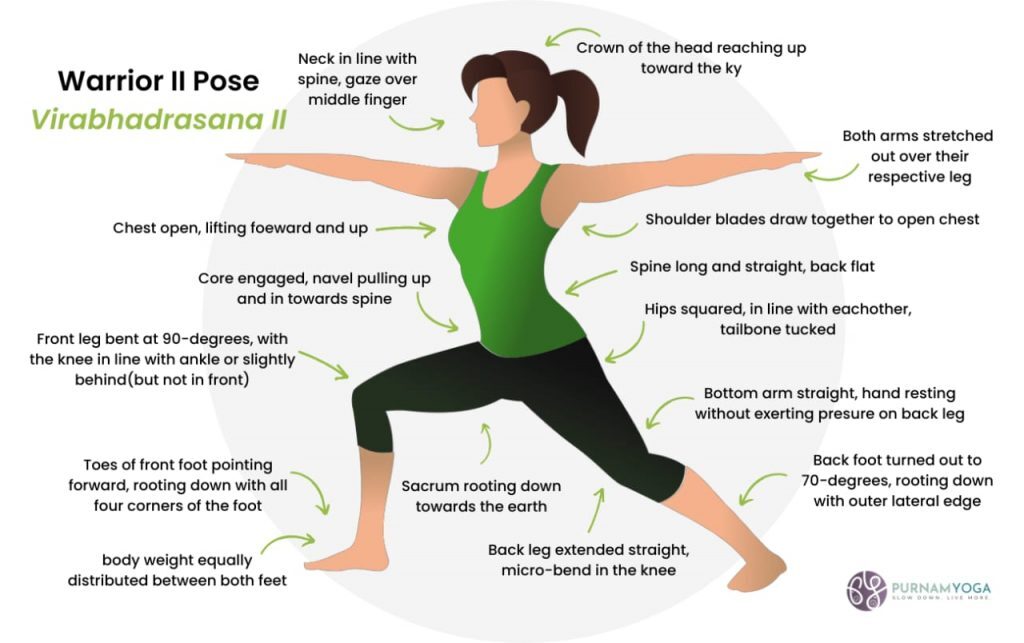
Proper leg alignment is crucial for maintaining balance, stability, and achieving the full benefits of Warrior II (Virabhadrasana II). Incorrect alignment can lead to discomfort, injury, and hinder the development of proper posture and strength. Understanding the nuances of front and back leg alignment will enhance your practice and deepen your understanding of this foundational posture.
Front Leg Alignment
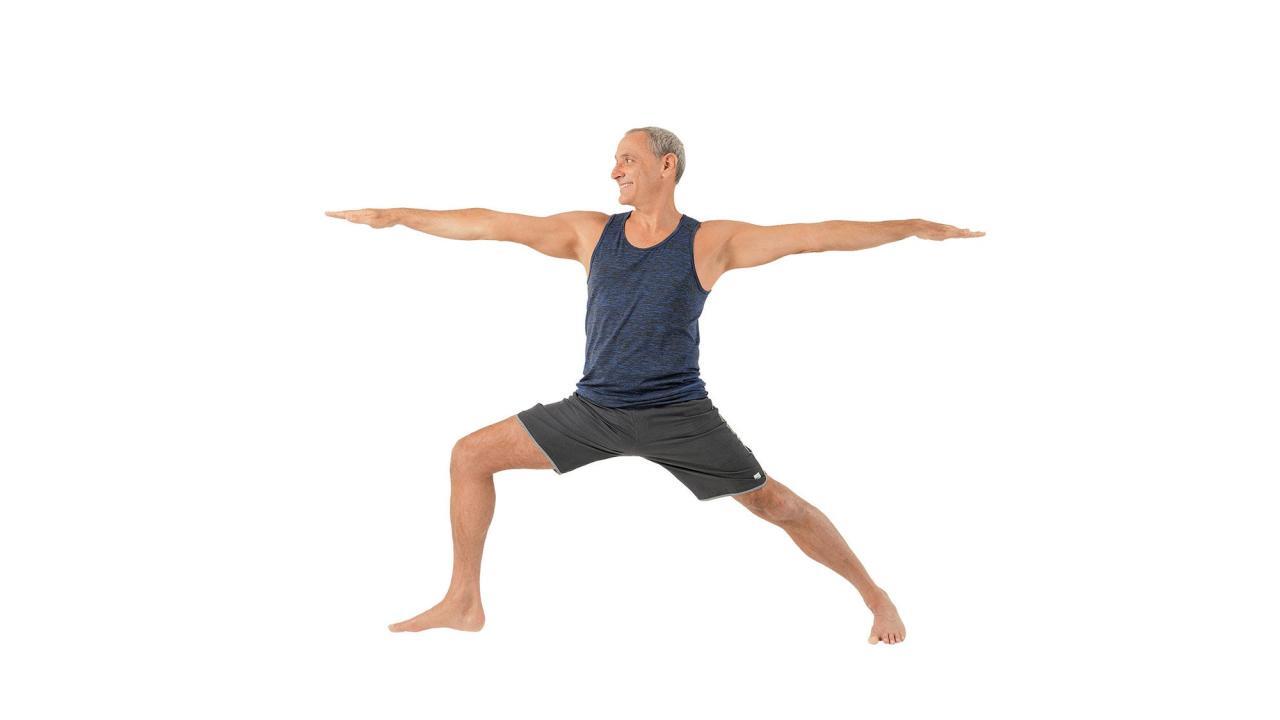
The front leg is the cornerstone of stability and proper alignment in Warrior II. The front knee should track directly over the front ankle, avoiding collapsing inward or outward. The angle of the front knee is approximately 90 degrees, ensuring a balanced and stable posture. Crucially, a straight line should be maintained from the front heel to the front hip.
This alignment not only supports balance but also fosters a deeper stretch in the front thigh and hip flexor muscles.
Back Leg Alignment
The back leg plays a significant role in maintaining balance and stability in Warrior II. The back foot should be firmly planted on the ground, either parallel to or slightly angled inwards to the front foot, depending on the practitioner’s flexibility. The back heel is often lifted, though it may be in contact with the floor depending on flexibility.
Maintaining a strong connection to the ground with the back leg prevents a feeling of instability.
Comparison of Correct and Incorrect Alignment
Correct alignment in Warrior II maintains a strong, balanced posture. The front knee is aligned over the ankle, and a straight line connects the front heel to the front hip. Incorrect alignment often involves the front knee collapsing inward or outward, or a lack of alignment between the front heel and hip. This can lead to uneven weight distribution, potential knee pain, and compromised stability.
Leg Alignment Table
| Leg | Alignment | Benefits | Possible Errors |
|---|---|---|---|
| Front Leg | Knee directly over ankle, 90-degree bend, straight line from heel to hip. | Maintains balance, promotes a deeper stretch in the front thigh and hip flexors, strengthens knee joint. | Knee collapsing inward (valgus), knee collapsing outward (varus), lack of alignment from heel to hip. |
| Back Leg | Firmly planted on the ground, either parallel or slightly angled inwards to the front foot. Heel lifted or in contact with floor depending on flexibility. | Provides support and balance, stretches the back hip and hamstring muscles, strengthens the core. | Back foot not planted firmly, heel dragging, or not aligned appropriately to the front foot. |
Arm and Shoulder Alignment
Proper arm and shoulder alignment in Warrior II (Virabhadrasana II) is crucial for maintaining balance, creating a sense of extension, and preventing injury. A well-aligned posture allows for a deeper connection with the pose, facilitating a more profound experience of the asana. This section will guide you through the correct placement of your arms, the role they play in the pose, and how to avoid common errors.Maintaining a relaxed yet strong shoulder position is paramount.
Tight shoulders can lead to discomfort and limit the pose’s benefits. Conversely, overly relaxed shoulders compromise stability and can lead to instability in the pose. Finding the balance between these two extremes is key to a successful and safe practice.
Arm Placement in Warrior II
The arms in Warrior II should be positioned parallel to the floor, creating a straight line from the fingertips to the wrists. The angle of the arms should mirror the angle of the torso and legs. The length of the arms should be relatively equal, maintaining a sense of equilibrium. The key is to avoid forcing or straining the arms; instead, they should be naturally extended and grounded.
Shoulder Position and Function
The shoulders should be relaxed and drawn down away from the ears. Imagine lengthening your spine and widening your chest, drawing the shoulders down and away from your neck and upper back. This process promotes a feeling of openness and expansion. This action prevents unnecessary strain and promotes balance.
Common Errors in Arm and Shoulder Placement
Common errors often stem from a lack of awareness of the subtle movements of the body and from improper sequencing. Some individuals may hunch their shoulders or elevate them toward their ears, losing the proper alignment. Others may have a pronounced rounding of the shoulders, restricting the natural extension of the arms and back. Understanding these common issues allows for effective self-correction and better alignment.
Illustrative Table of Arm and Shoulder Alignment
| Arm Placement | Shoulder Position | Purpose | Possible Issues |
|---|---|---|---|
| Arms parallel to the floor, extended straight from the wrists, with a consistent length | Relaxed, drawn down, and away from the ears, with a sense of widening across the chest | Maintain balance, promote extension, and prevent injury | Hunched or elevated shoulders, arms not parallel to the floor, uneven length of arms |
| Arms angled excessively inward or outward | Shoulders rounded or pulled up towards the ears | Compromise balance, restrict extension, and potentially lead to shoulder discomfort | Uneven weight distribution, restricted breathing, and strain on the shoulders |
| Arms too high or too low in relation to the torso | Imbalance in shoulder tension, leading to discomfort or strain | Disrupts the pose’s flow and creates imbalance | Uneven weight distribution, reduced sense of extension, potential strain on wrists and elbows |
Torso and Hip Alignment
Proper torso and hip alignment in Warrior II (Virabhadrasana II) is crucial for maintaining balance, stability, and achieving the full benefits of the pose. A well-aligned torso and hip region directly impacts the engagement of the core, the stability of the knees, and the overall effectiveness of the posture. Understanding the correct positioning ensures a deeper connection with the pose and minimizes the risk of injury.Maintaining a neutral spine is paramount for optimal torso alignment in Warrior II.
This involves avoiding excessive arching or rounding of the back. Engaging the core muscles is essential to stabilize the torso and support the spine. This core engagement also helps to distribute weight evenly across the body, facilitating balance. The relationship between hip and knee alignment is intricately linked, with the hips playing a vital role in guiding the knees over the ankles.
Furthermore, maintaining an open chest and engaging the back muscles promotes a lengthening and expansion of the spine, enhancing the pose’s benefits.
Neutral Spine and Core Engagement
A neutral spine is the foundation for a stable and balanced torso. Maintaining this natural curvature of the spine helps to prevent strain on the back and allows for proper engagement of the core muscles. By engaging the core, you effectively create a strong internal support system that stabilizes the torso and helps to prevent unwanted movement or sway.
This stability is crucial for maintaining balance throughout the pose, as it ensures the weight is distributed evenly.
Hip and Knee Alignment
The hips play a critical role in guiding the knees over the ankles in Warrior II. A proper hip alignment helps to maintain the correct angle of the knee joint. This alignment, combined with the engagement of the core muscles, ensures the knees track in line with the ankles. This precise alignment helps prevent excessive pressure on the knee joints and promotes a more stable and balanced pose.
Open Chest and Back Muscle Engagement
Maintaining an open chest in Warrior II is essential for expanding the chest cavity and promoting a sense of openness and ease in the posture. This open chest position allows for a deeper breath and creates a more expansive and powerful pose. Furthermore, engaging the back muscles, particularly the muscles along the spine, provides stability and support for the torso, ensuring the pose is held with grace and control.
A well-engaged back complements the core engagement and maintains the spine’s natural alignment.
Torso and Hip Alignment Summary
| Body Part | Alignment | Impact on Balance | Common Issues |
|---|---|---|---|
| Spine | Neutral, avoiding excessive arching or rounding | Maintains balance and prevents back strain | Rounding the back, arching excessively |
| Hips | Aligned with the front knee and ankle | Directs the knee over the ankle, promoting stability | Rotating the hips, not maintaining proper alignment |
| Core | Engaged and active | Provides stability and prevents unwanted movement | Relaxed core, lack of engagement |
| Chest | Open and expanded | Promotes breath and a sense of openness | Collapsed chest, rounded shoulders |
Gaze and Head Alignment
Proper gaze and head alignment in Warrior II (Virabhadrasana II) are crucial for maintaining balance, stability, and a deep connection with the pose. A well-aligned gaze not only enhances the visual focus but also directs energy throughout the body, fostering a deeper sense of extension and connection. This alignment is directly linked to a strong core engagement, which underpins the overall stability of the pose.Maintaining a strong core connection is paramount for a balanced gaze.
When the core muscles are engaged, they provide a stable platform for the spine and head, allowing for a clear and focused gaze without compromising the integrity of the pose. This core engagement also aids in maintaining the extension of the body from the fingertips to the toes. The head alignment, in turn, plays a vital role in supporting the stability of the entire posture.
Gaze Direction in Warrior II
The gaze in Warrior II is directed along the extended arm, towards the front of the mat. This direct gaze, parallel to the floor, encourages a sense of stability and extension in the body. A focused gaze helps maintain a balanced posture by engaging the body’s core and aligning the head with the spine. The eyes should not be looking down, up, or to the side, but consistently forward.
This consistent gaze provides a direct line of energy that runs through the body, promoting stability and extension.
Impact of Head Alignment on Body Stability
Head alignment directly impacts the stability of the body in Warrior II. A properly aligned head, stacked directly above the shoulders and hips, contributes to a balanced and stable posture. This alignment ensures that the spine remains neutral and the body is aligned from the ground up. A misaligned head can lead to an uneven distribution of weight and instability in the pose.
Maintaining a balanced head position directly affects the spine, ensuring the overall stability and effectiveness of the pose.
Table: Head and Gaze Placement in Warrior II
| Gaze Direction | Head Position | Impact on Alignment | Considerations |
|---|---|---|---|
| Forward, along the extended arm, parallel to the floor. | Head stacked directly above shoulders and hips, maintaining a neutral spine. | Promotes stability, extension, and balance. Encourages engagement of core muscles. | Ensure the gaze is steady and focused, not strained or tense. Avoid looking up or down, or to the side. |
| Downward gaze. | Head tilted downward, potentially rounding the shoulders. | Can compromise the extension of the spine and create imbalances in the posture. | Focus on lifting the gaze to the extended arm, maintaining a neutral spine. |
| Upward gaze. | Head tilted upward, potentially arching the back. | Can strain the neck and lead to an unstable posture. | Keep the gaze forward, along the extended arm. |
| Sideward gaze. | Head turned to the side, potentially causing a twisting of the spine. | Disrupts the balanced alignment of the body, potentially compromising stability. | Maintain a direct gaze forward, along the extended arm. |
Variations and Modifications

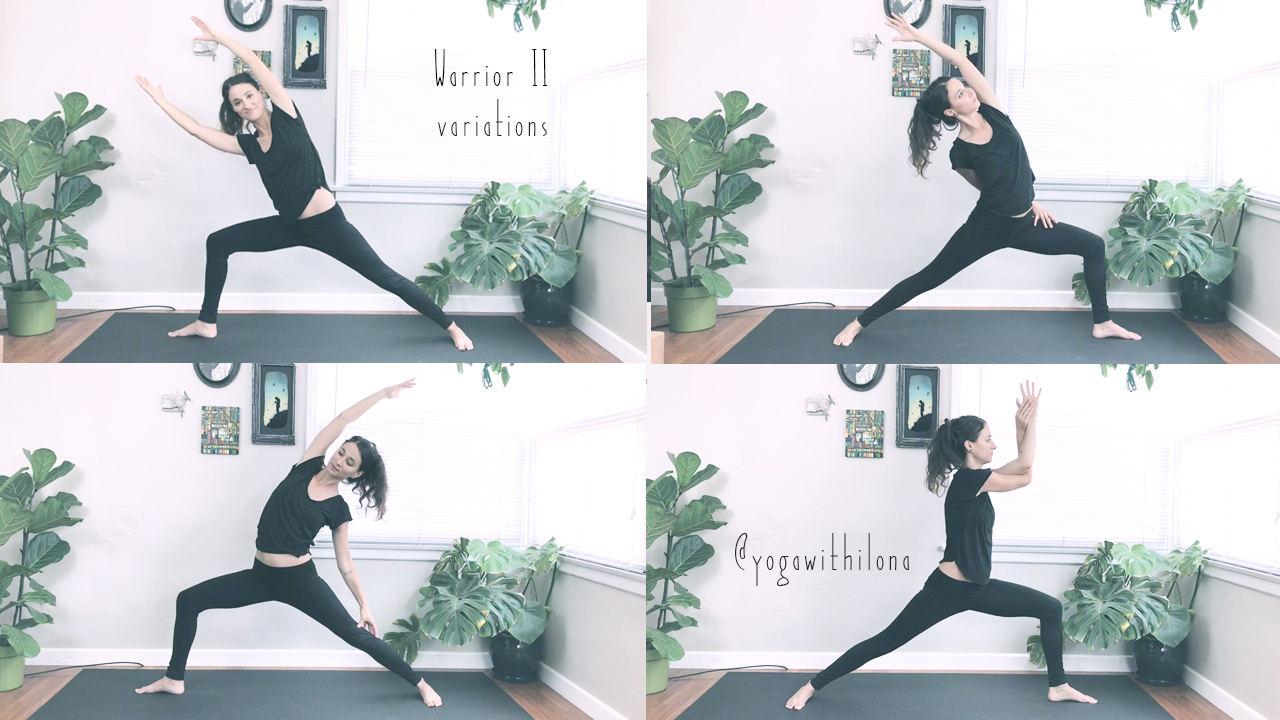
Adapting Warrior II (Virabhadrasana II) to individual needs and abilities is crucial for maximizing its benefits and minimizing the risk of injury. This involves understanding the various modifications and variations available, allowing practitioners to tailor the posture to their specific physical limitations or goals. This section explores these modifications, focusing on safe and effective adjustments.Understanding variations and modifications allows practitioners to progress gradually, fostering a deeper connection with their bodies and enhancing their overall practice.
This mindful approach is essential for achieving the desired outcomes of the posture while prioritizing well-being.
Modifications for Different Levels
Modifications are essential for accommodating various levels of experience and physical capabilities. Beginners or those with limited flexibility can benefit from adjustments that ease the demands on the body, promoting a safe and enjoyable experience. Experienced practitioners can modify the posture to challenge their balance and deepen the stretch.
- Using Props: Incorporating props like blocks or blankets can support the body in various ways. Blocks can elevate the hands, making the pose more accessible for those with limited mobility or flexibility in the wrists, shoulders, or hips. A block placed under the front hand, for instance, can make it easier to maintain a straight line from the wrist to the elbow and prevent rounding of the spine.
Blankets can provide additional support for the hips, especially for individuals with tight hip flexors or knee issues.
- Adjusting Arm Position: Modifying the arm position can significantly impact the posture. For instance, one may bend the front elbow and place the forearm on a block, which can lessen the stress on the shoulders and allow a deeper stretch in the hips. Alternately, one can maintain the arms extended but decrease the angle between the arms and the body, reducing the intensity of the posture.
- Modifying the Leg Placement: The distance between the legs can be adjusted based on the individual’s needs. A wider stance can help with stability, while a narrower stance can challenge balance and deepen the stretch in the inner thighs.
Modifications for Injuries or Limitations
Recognizing and accommodating physical limitations or injuries is critical to prevent exacerbating existing issues. By adjusting the posture, practitioners can maintain the benefits of the asana while respecting their limitations.
- Knee Issues: For individuals with knee pain or injury, modifications are essential. Using blankets or blocks under the front knee can provide support and alleviate pressure. Alternatively, a shorter stance, moving the front foot closer to the body, can lessen the stress on the knees.
- Shoulder or Wrist Injuries: Adjusting the arm position is vital. Holding the arms at a lower angle or placing a block under the front hand can alleviate stress on the shoulders or wrists. Another option is to bring the hands closer to the body, reducing the stretch in the shoulders and arms.
- Back Pain: Adjusting the torso position is paramount. Using a support beneath the torso or keeping the spine straight and avoiding excessive arching can alleviate back pain. Focus on maintaining a neutral spine throughout the pose.
Variations Table
| Variation | Description | Benefits | Considerations |
|---|---|---|---|
| Warrior II with Blocks | Place blocks under the hands for support and to adjust the height of the arms. | Improved shoulder alignment, enhanced stability, increased comfort. | Blocks should be used appropriately, ensuring they do not compromise alignment. |
| Warrior II with Bent Front Knee | Bend the front knee, placing the forearm on a block for support. | Reduced stress on shoulders and hips, increased accessibility for those with limited flexibility. | Ensure proper alignment of the knee over the ankle; avoid collapsing the front knee inwards. |
| Warrior II with Wider Stance | Increase the distance between the feet for greater stability and a deeper stretch. | Enhanced balance, improved hip opening. | Requires greater balance and coordination; may not be suitable for those with ankle or knee issues. |
| Warrior II with Narrower Stance | Decrease the distance between the feet for a more challenging balance and deeper stretch in the inner thighs. | Improved balance, deeper inner thigh stretch. | Requires excellent balance and coordination; not recommended for beginners or those with knee issues. |
Common Errors and How to Correct Them
Understanding and addressing common errors in Warrior II (Virabhadrasana II) is crucial for achieving proper alignment and maximizing the benefits of the pose. Identifying these errors and learning how to correct them empowers practitioners to deepen their understanding and practice, fostering a safer and more effective yoga journey. This section focuses on frequent alignment pitfalls and actionable solutions to refine your Warrior II.Correcting alignment errors is not merely about achieving a perfect pose; it’s about developing a mindful connection with your body.
By understanding the underlying causes of these errors, you can proactively prevent them and cultivate a deeper appreciation for the subtleties of your practice. Self-assessment and self-correction are essential components of this process.
Frequent Alignment Errors in Warrior II
Recognizing common errors is the first step towards achieving optimal alignment in Warrior II. These errors often stem from a lack of awareness, insufficient strength, or a misinterpretation of the pose’s guidelines. Consistent practice and mindful self-assessment are crucial for recognizing and correcting these errors.
Table of Common Errors and Solutions
| Error | Cause | Correction | Prevention |
|---|---|---|---|
| Forward-leaning torso | Lack of core engagement, insufficient hip opening, or tight hamstrings. | Engage your core muscles, gently rotate your hips forward, and lengthen your spine. Ensure your front knee tracks over your front ankle. If necessary, adjust the placement of your front foot for better balance. | Strengthen your core and hip flexors through regular practice. Incorporate stretches for hamstrings and hips. Consciously engage your core throughout the pose. |
| Knee collapsing inward (valgus collapse) | Weakness in the inner thighs, imbalance in leg strength, or improper positioning of the feet. | Engage your inner thighs, ensuring the knee tracks directly over the ankle. Actively press outward with your front foot and draw the inner thighs towards each other. | Strengthen inner thighs and outer hips through targeted exercises. Maintain a consistent awareness of foot placement and alignment throughout the pose. |
| Arms not parallel | Inadequate shoulder mobility, lack of shoulder engagement, or a tendency to collapse the shoulders forward. | Extend your arms parallel to the floor, actively pressing outward with your palms. Ensure your shoulders are relaxed and down away from your ears. | Practice shoulder stretches and strengthening exercises. Actively engage your shoulder blades throughout the pose, maintaining a relaxed posture. |
| Twisted or uneven hips | Tight hips, lack of hip mobility, or an asymmetry in the leg length. | Ensure both hips face forward. If there’s an asymmetry, consider adjusting the positioning of your back foot. Engage your outer hips and gently rotate your front hip forward. | Incorporate hip opening stretches and mobility exercises into your routine. Maintain consistent awareness of hip alignment during the pose. |
| Unaligned gaze | Inadequate focus, lack of stability, or a tendency to look down. | Extend your gaze over your front hand, or slightly upward, maintaining a strong gaze point. This aids in maintaining balance and lengthening the spine. | Practice focusing on a specific point throughout the pose. Strengthen your core and legs to support your balance. |
Importance of Self-Assessment and Self-Correction
Regular self-assessment is crucial for identifying and correcting alignment errors in Warrior II. By observing your body’s position and paying attention to any discrepancies, you can proactively address potential problems. This process enhances your understanding of your body’s needs and fosters a deeper connection with your practice. Self-correction allows you to personalize your practice, addressing specific areas of need.
By consistently assessing your alignment, you cultivate a mindful and effective practice, preventing injury and maximizing the benefits of the pose.
Maintaining Proper Alignment During Hold
Maintaining proper alignment throughout the Warrior II pose is crucial for maximizing its benefits and minimizing the risk of injury. Consistent alignment ensures that the pose is performed safely and effectively, engaging the correct muscles and promoting balance and stability. It’s not just about holding the pose; it’s about maintaining the integrity of the alignment throughout the entire duration of the hold.Proper alignment during the hold is essential for preventing strain on joints, developing strength in the supporting muscles, and achieving a deeper stretch in the targeted areas.
This sustained alignment also cultivates a heightened sense of body awareness, fostering a more mindful and connected practice. Understanding how to monitor and adjust your alignment during the hold is key to a safe and fulfilling Warrior II experience.
Monitoring and Adjusting Posture
Maintaining the alignment of Warrior II requires continuous awareness. This involves actively checking and adjusting your posture throughout the hold. It’s not a static position; rather, it’s a dynamic one that requires ongoing attention. Regularly checking and adjusting your alignment ensures that you are not compromising the pose and its benefits.
Role of Breath in Maintaining Alignment
Conscious breathing plays a vital role in maintaining alignment during the Warrior II hold. Controlled, deep breaths promote stability and awareness. As you breathe, notice how your body responds; subtle shifts in posture can be detected through the breath. The rhythm of your breath can guide your adjustments, helping you stay connected to your body’s alignment.
Recognizing Signs of Misalignment and Corrective Actions
Misalignments in Warrior II can manifest in various ways. Understanding these signs and implementing corrective actions is vital for maintaining proper posture and avoiding injury. A misaligned posture can affect the effectiveness of the pose and can lead to discomfort or pain.
- Forward lean: If your torso leans forward, gently engage your core muscles and lengthen your spine. Adjust your front foot position slightly to increase stability and create a more upright posture.
- Knee caving inward: If your front knee is collapsing inward, ensure that your front knee is aligned directly over your ankle. Strengthening the muscles around the knee can help prevent this.
- Uneven hips: If one hip is higher than the other, engage your core muscles and gently shift your weight to realign your hips. Check your foot placement to ensure both hips are square to the mat.
- Rounding of the back: If your back rounds, engage your back muscles and lengthen your spine. Ensure that your shoulders are relaxed and down away from your ears.
Monitoring Alignment During the Hold
Consistent self-assessment is key to maintaining alignment throughout the Warrior II hold. Regular checks prevent minor misalignments from escalating into larger problems.
| Time Point | Alignment Check | Action | Result |
|---|---|---|---|
| Beginning of Hold | Check posture for proper alignment of legs, arms, hips, and torso. | Adjust as needed, maintaining a strong and stable foundation. | Stable and aligned Warrior II posture. |
| Mid-Hold | Observe for any shifts in alignment. | Make subtle adjustments to maintain proper positioning of the body parts. | Continued proper alignment, with consistent engagement of the muscles. |
| Ending of Hold | Check for any lingering misalignments. | Make final adjustments, ensuring a smooth transition back to neutral. | Complete and aligned Warrior II posture. |
Benefits of Proper Alignment in Warrior II
Proper alignment in Warrior II (Virabhadrasana II) is not just about achieving a visually appealing pose; it’s fundamental to reaping the full spectrum of benefits this powerful posture offers. Correct alignment ensures optimal engagement of muscles, enhances joint health, and promotes a harmonious flow of energy throughout the body. This focus on precision unlocks a deeper connection with the pose, leading to a more enriching and beneficial practice.Maintaining precise alignment in Warrior II is crucial for injury prevention.
Improper alignment can lead to strain on joints, ligaments, and muscles, potentially causing discomfort or long-term issues. By understanding and diligently practicing proper alignment, practitioners can significantly reduce the risk of injuries associated with this dynamic posture.
Physical Well-being Benefits
Understanding the proper alignment in Warrior II is key to maximizing the physical benefits. This posture engages multiple muscle groups, promoting strength, flexibility, and stability. Correct alignment ensures a balanced workload across these muscles, preventing overexertion or imbalances that could lead to injuries.
- Enhanced Strength and Muscle Tone: Proper alignment in Warrior II engages muscles in the legs, core, and arms, contributing to overall strength and tone. The posture requires active engagement of muscles to maintain balance and stability, leading to improved strength in the targeted areas.
- Improved Flexibility and Range of Motion: Correct alignment helps stretch and lengthen muscles in the legs, hips, and torso, improving flexibility and range of motion in these areas. By aligning the hips and spine, the pose naturally increases the range of movement in these regions.
- Increased Joint Stability: Proper alignment minimizes strain on joints like the knees, hips, and ankles, promoting long-term joint health and stability. By correctly positioning the legs and torso, the pose distributes weight evenly and supports the joints, reducing stress and the risk of injury.
- Improved Posture and Balance: Maintaining proper alignment in Warrior II reinforces core strength and improves balance. This direct engagement of the core muscles strengthens the entire body, which leads to improved posture in daily activities.
Mental Well-being Benefits
The benefits of proper alignment extend beyond the physical realm, impacting mental well-being as well. The focused attention required for maintaining alignment cultivates mindfulness and presence. The stability and groundedness experienced in the pose can positively influence the practitioner’s mental state.
- Enhanced Mindfulness and Presence: The focus required to maintain proper alignment in Warrior II cultivates mindfulness and presence, promoting a deeper connection with the body and breath. This conscious engagement with the posture can lead to a greater sense of self-awareness.
- Reduced Stress and Anxiety: The physical engagement and mindful awareness cultivated through correct alignment can help to reduce stress and anxiety. The deep breathing and stability experienced in the pose can create a calming effect, positively impacting mental well-being.
- Increased Body Awareness: Precise alignment in Warrior II enhances body awareness. By paying close attention to the positioning of each body part, the practitioner develops a stronger connection with their physical form, fostering a deeper understanding of their body’s capabilities.
Injury Prevention
Precise alignment is crucial for preventing injuries in Warrior II. Improper alignment can lead to strain on joints, ligaments, and muscles, potentially causing discomfort or long-term issues.
- Minimized Risk of Strain and Sprains: Maintaining proper alignment in Warrior II distributes weight evenly, reducing stress on joints and ligaments. This alignment prevents excessive strain on these structures, minimizing the risk of injuries such as sprains or strains.
- Prevention of Muscle Tears and Dislocations: Correct alignment ensures that muscles are engaged appropriately, reducing the risk of muscle tears. It also promotes joint stability, decreasing the likelihood of dislocations.
- Long-Term Joint Health Preservation: By practicing proper alignment, practitioners contribute to long-term joint health. This consistent practice reduces the risk of long-term joint pain and discomfort associated with improper form over time.
Final Review
In conclusion, achieving proper alignment in Warrior II is a journey of mindful awareness and conscious effort. By meticulously understanding and applying the principles Artikeld in this guide, you’ll cultivate a deeper connection with your body and unlock the full potential of this powerful asana. Remember, consistent practice and self-assessment are key to mastering this pose.